History of Horndean: Gales Brewery, Trams & Old Churches
Horndean grew as a coaching stop on the Portsmouth road and was home to Gales Brewery until 2006. Here is its story, from Merchistoun Hall to the old tramway.
Horndean grew as a staging post on the Portsmouth to London road and was home to Gales Brewery, which Fuller's bought in 2005 and closed in March 2006; trams of the Portsdown and Horndean Light Railway served the village from 1903 until 9 January 1935.
A short history of Horndean
Horndean is a village and civil parish in East Hampshire. This guide draws on Wikipedia for the history and on Horndean Parish Council's own pages, and where the sources differ it says so.
According to Wikipedia's Horndean article, the village grew in the early Middle Ages thanks to its position as a staging post on the road from Portsmouth to London, which is now the A3. The same article says the name probably means a valley by a horn-shaped hill, though it also gives a competing dormouse explanation, so treat the origin of the name as uncertain.
Gales Brewery: the village's best-known business
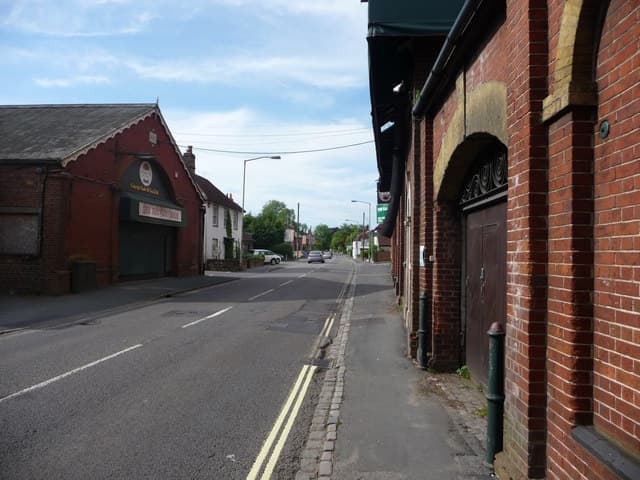
For much of its modern history, Horndean was the home of Gales Brewery. Wikipedia's Gales Brewery article says George Gale & Co. Ltd was founded in 1847 and made beers including HSB (Horndean Special Bitter). It says the brewery took water from its own well beneath the site, fed from the South Downs. The Horndean article gives a slightly different start, saying the village was home to the brewery from 1850, so the exact founding date depends on which Wikipedia page you read.
The end came in the mid 2000s. Wikipedia says Fuller, Smith and Turner bought Gales in late 2005 for £92 million, that the Campaign for Real Ale ran a campaign asking Fuller's to keep brewing the full range at Horndean, and that in January 2006 Fuller's began cutting jobs. On 27 February 2006 it was announced that the brewery would close at the end of March 2006, with distribution and warehousing continuing locally and production moving to Fuller's Griffin Brewery in Chiswick. The article records Last Drop as the final ale brewed at Gales before closure, and says Gales Bitter was discontinued.
As for what happened to the site, the Gales Brewery article says that as of 2017 most of it had been replaced by apartments and retail shops, with the main tower still standing and converted into apartments alongside new buildings. The Horndean article says the site was converted to shops and flats.
Merchistoun Hall
Merchistoun Hall is the village's best-known historic house. Wikipedia says that in 1836 the Hon. Sir Charles Napier Senior, father of the more famous Admiral Sir Charles Napier, bought a property called The Grove and renamed it Merchistoun Hall after his former home in Falkirk. It describes the building as Grade II listed and the village's major community centre, and says the Hazleton estate was built on the former grounds of Merchistoun Hall in the early 1960s. The Horndean article also names Horndean Community Association as running its community centres at Merchistoun Hall and Barton Hall. If you want to hire a hall today, Horndean Parish Council lists Jubilee Hall and Napier Hall on its halls for hire page, with bookings through the parish office on 02392 597766. See also our community halls and clubs guide.
The Portsdown and Horndean Light Railway
Horndean never had a main line station, and the Horndean article says it was bypassed by main line railways and instead served by trams until 1935, then by buses. Wikipedia's article on the Portsdown and Horndean Light Railway says the tram line was authorised by an order of 1898, opened on 3 March 1903 and ran from Cosham to Horndean, and that it was a wholly owned subsidiary of the Provincial Tramways Company. It says the line ran alongside the London Road, now the A3, and that traces can still be seen as extra-wide pavements in several places. It records that the last tram ran on 9 January 1935, replaced by motor buses on what became the Southdown Bus Company route 42. For modern transport, see our Horndean buses guide and nearest train stations guide.
Catherington and Blendworth churches
Two neighbouring villages, both now in Horndean parish, have their own churches. Wikipedia's Catherington article calls All Saints' Church the oldest building in Catherington, mid 12th century in origin, restored in 1883 by Edmund Ferrey. It says the church contains a notable tomb monument to Sir Nicholas Hyde and his wife, an early 14th-century painting of the Weighing of Souls on the nave wall, and in the churchyard the tomb of Admiral Sir Charles Napier, along with the tomb of the actor Edmund Kean.
Holy Trinity in Blendworth is much younger. Wikipedia's Blendworth article says it was erected in 1850 to 1851. Blendworth is described there as a village lying just northeast of Horndean, east of the A3. For walking routes that link these places, see our Catherington, Blendworth and Lovedean guide and the parish council's Green Trail and Heritage Network page, which says new mapping boards and trails for Blendworth and Catherington are being installed.
Other local history worth knowing
Horndean Parish Council's war memorials page describes a memorial area to two Australian airmen, Pilot Officers Edward Wicky and Oswald Mountford, whose Mosquito aircraft came down near the village in the early hours of 5 February 1945. Wikipedia also says a Victorian workhouse once stood in the village and was demolished in 1982, and that the A3(M) was built in the 1970s. For more things to see, try our things to do in Horndean.
Quick answers
When did Gales Brewery close? Wikipedia says Fuller's announced on 27 February 2006 that the Horndean brewery would close at the end of March 2006.
Why did trams run to Horndean? The Portsdown and Horndean Light Railway opened on 3 March 1903, running from Cosham; the last tram ran on 9 January 1935.
What is Merchistoun Hall? A Grade II listed former house, once called The Grove, which Wikipedia says Sir Charles Napier Senior renamed in 1836; it is now a community centre.
How old is Catherington church? Wikipedia gives its origin as mid 12th century, restored in 1883.
Share this article